MFL
“Speaking one language allows us to live and communicate in our world. Speaking other languages opens the door to undiscovered ones, where there are no limits to possibilities, life experiences and the potential to seize global opportunities.”
Vanessa Priest. Executive Director of Learning, MFL, TEFL, EAL, Mandarin and Community Languages.
In MFL at Lyng Hall, we believe our students to be Global Citizens that deserve a World Class education.
Students develop lifelong language skills, which will enable them to communicate in Spanish and use that literacy and language learning to support their learning in subjects across the curriculum. Scientific studies demonstrate that studying another language has a positive impact on brain development and functioning.
Our vision is:
“To instil, in all pupils, a love for languages and an appreciation of their importance in an increasingly globalized society”.
our aims
- To teach pupils to communicate effectively and confidently in English and another foreign language.
- To build lifelong linguist skills so students can effectively communicate in a multi lingual world.
- To develop curriculums and offer qualifications that enable students to succeed in languages
- To widen pupils learning experiences beyond academia with extracurricular cultural activities and innovative
- To inspire students to extend and pursue language learning outside the classroom
- To nurture confident and happy students that embrace and share their own language and cultural experiences.
- To encourage respect and appreciation for the cultural aspects of different countries and languages are spoken.
- To prepare our pupils to be competent global citizens through their knowledge of languages and appreciation of foreign cultures.
introduction & context
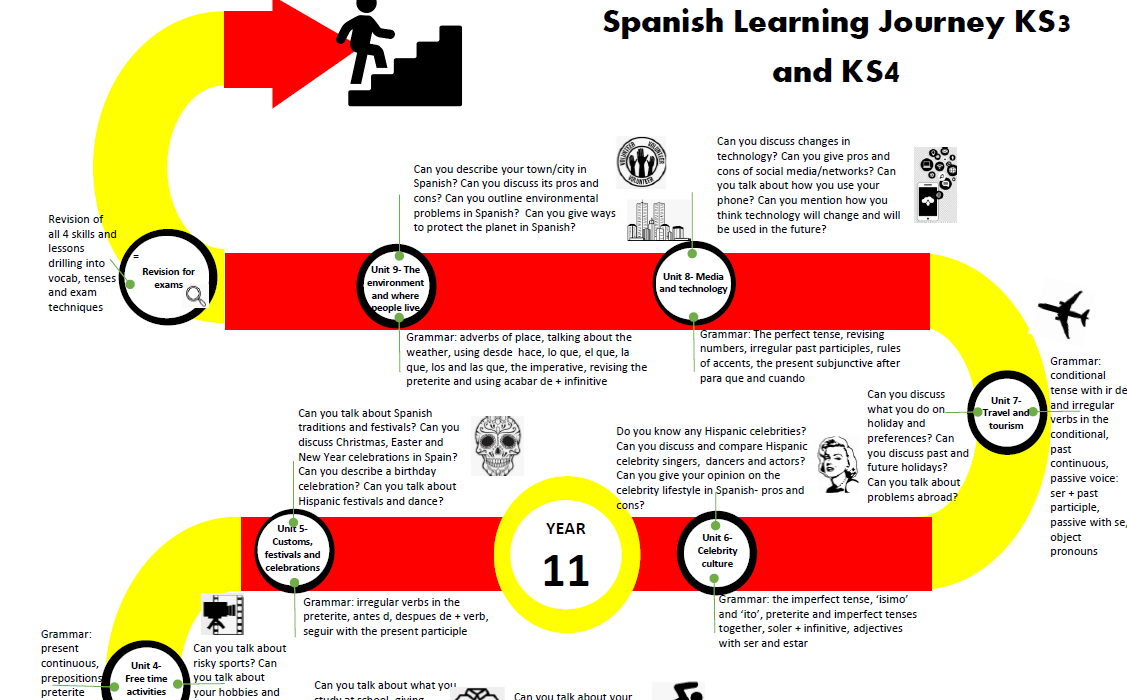
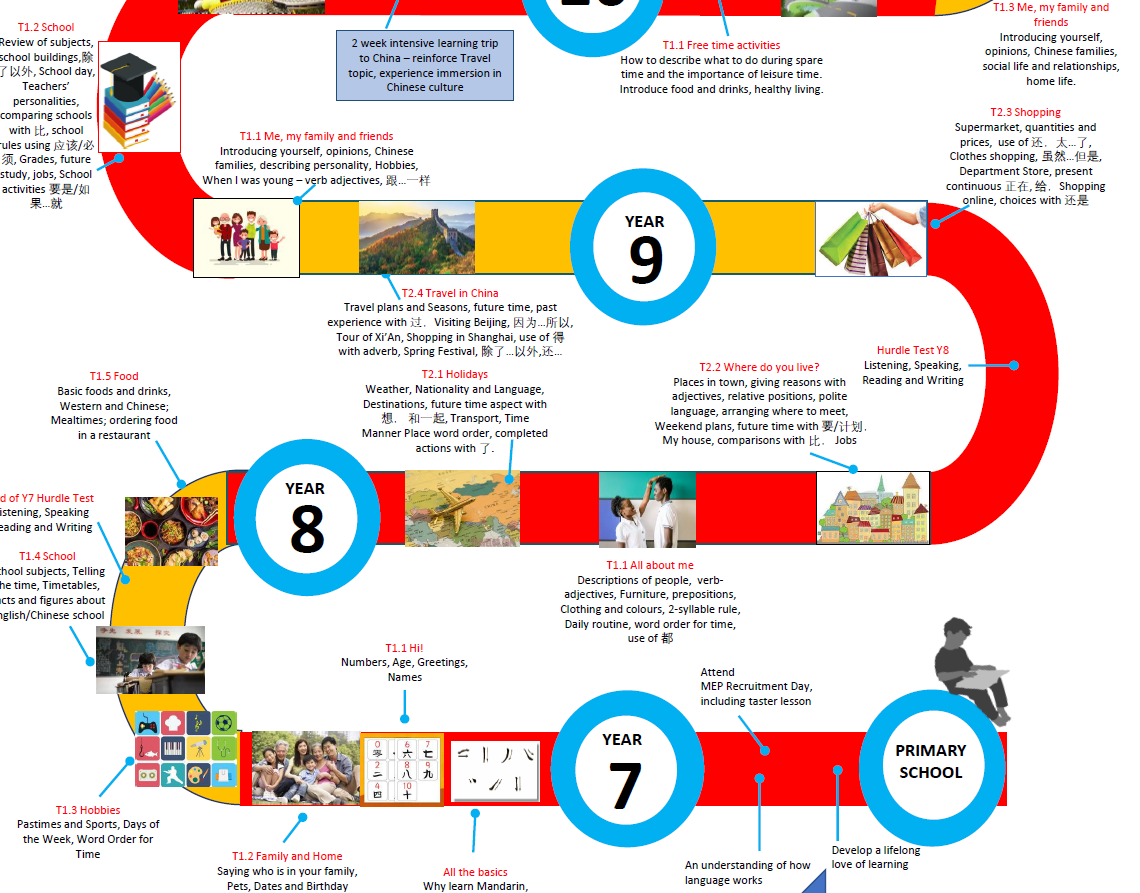
Our 5 year Spanish Curriculum provides opportunities for all pupils to access MFL language learning and develop transferable skills at KS3 and into KS4, if chosen as an option subject.
We actively promote the importance of language learning by demonstrating its relevance and how language skills can improve outcomes in all subjects and in future lives.
We plan MFL lessons that ensure acquisition MFL skills and enhances pupil creativity, memory, problem solving and critical thinking skills. Supporting the development of skills that are useful in all areas of learning and life.
By layering the learning, teaching focuses on building on prior learning, securing knowledge of grammar, tenses, language learning strategies and communication techniques.
We deliver classroom activities strengthen students ability to compare and contrast, draw conclusions, to gather, analyse and assess information, and to improve your observational skills.
During the course, our students will focus on retaining, recalling and reusing the vocabulary, grammar and verb conjugations they have learnt in different contexts, situations and topic areas.
Cross-curricular learning is entrenched in curriculum development and lesson planning, where language learning tasks are talk in mainstream subject contexts.
In addition, students build a deep knowledge of Spanish culture, history and life, expanding their appreciation of human and cultural diversity.
Embedded in the MFL curriculum are opportunities for students to gain CIAG – Employability skills. This is by way of embedded lesson activities and planned extra-curricular events, trips and guest speakers.
Quality of teaching & learning
The quality of teaching and learning in MFL is very good overall and improving all the time, due to the commitment of staff and pupil engagement in the learning. At KS3 Teaching and learning is good to excellent. At KS4 Teaching and learning is excellent.
A clearly written and well-structured long-term curriculum plan is now complete, ensuring adherence to and fulfilling National curriculum requirements. The long term plan plainly sets out the half termly module. The context and objectives, the powerful learning and language skills that students are expected to attain are concise and easy to follow.
We have also clearly indicted the key questions that pupils should be able to answer. Questions in the target language are asked to ensure pupils can demonstrate the language and grammar structures learnt for each topic ie. School life. Questions are formulated to ensure students can make statements, give opinions and explain a wider context of learning. For example, how they can use strategies to work out meaning and what they can do to improve their work. Questioning by teachers to students, vice versa and student to student is embedded in the teaching and learning of every lesson.
The long term plan forms the basis of Medium and short term planning, with individual lesson planning annotated for the specific needs of the different class sets, according to the progress they have made and the support they require.
New interactive resources at KS3 and KS4 have provided resources that ensure the development of all 4 skills areas, listening, speaking, reading and writing, giving pupils experience of native speakers and language use in real life situations.
The teaching expertise is very strong and is evident in the way that teaching and learning responds and is adapted to the progress made, addressing areas that need developing and revisiting previous learning in new context to embed into the long term memory.
Lesson are delivered in a creative and engaging manner, mixing traditional grammar and vocabulary learning with active participation activities that bring language alive and provide opportunities for students to demonstrate their learning in a fun and creative way.
Marking and assessment is particularly strong with pupils responding and actively engaged in their progress. They can talk confidently about where they are, what they are achieving, where they need to focus to improve.
We have developed a colour coded assessment and marking system with grades 1-9 and 3 sub levels, clearly defined with what is achieved in each grade/skill. All pupil class books display the descriptors and trackers, and books are marked according to these descriptors by way of grading sticker and using the FAR marking system. In each lesson students are aware of the grade/skill they are aiming to achieve, which are embedded in lesson objectives and referred to during the lesson. The marking stickers indicate the grade, description and skill achieved for each pieces of work completed, making it immediate and clearly identifiable with the progress made.
An assessment calendar is set at the beginning of the year and appropriate summative assessments chosen according to where classes are in the delivery of the curriculum and the learning progress made. In addition, pupils complete regular assessment activities within each lesson, evident in their books and by the marking stickers.
We regularly use teacher, peer and self-assessment to ensure a broaden body of evidence to demonstrate learning and support progress, giving verbal and written feedback and time for students to evaluate and respond.
Each student has an assessment book specifically for summative assessments. Each book has descriptors, trackers and the curriculum overview for years 7-11, tracking the skills assessed and their current grades achieved for each unit of work.
Through work and assessment books, grades are recorded and monitored. This helps to identify pupils who are underachieving or coasting to target additional intervention and support. We monitor the progress of every pupil is monitored, with particular focus given to pupils in PPI, LAC, EAL, SEND, WBB groupings. Gaps in progress and attainment remain for some of our students, however do not necessarily follow expectations. For instance, EAL pupils are often stronger in language learning than in other mainstream subjects.
Monitoring of the curriculum and pupil progress is conducted through work scrutinys, learning walks, meeting time and one to one discussion.
leadership & management
Leadership and management is strong. The department leader has a sound strategic overview and works in close partnership with teaching staff to ensure a consistency in Teaching and Learning, sets clear expectations, encourages and supports staff to development to improve outcomes for pupils.
The department consists of
- Director of Languages and Culture who teaches Spanish and leads all areas of the Directorate.
- Deputy Director of Languages and culture who leads TEFL (Teaching English as a Foreign Language), teaching and supporting newly arrived or non English speaking students.
- Leader of learning for Spanish – focussing on curriculum development
- Mandarin teacher who works closely with the Mandarin Excellence Programme, British council and UCL.
- Spanish Teacher
- TEFL teacher
Directorate meeting time is shared with TEFL staff and staff meet fortnightly to discuss agreed agenda items. A record of meetings is updated, actions, progress and impact is Rag rated. This correlates to the Directorate action plan.
Lesson observations, coaching and mentoring are completed on a regular basis and when issues have been identified that need specific attention and improvement. Good practise is shared through drop in sessions and by class sharing and regular informal discussions. We are a very strong department with very positive relationships.
Quality assurance is led the Exec DOL, in partnership with the Associate Head Teacher.
Professional development targets and review meetings are conducted each term.
Personal Development, Behaviour and Welfare of Pupils
We mirror the ethos of our school and promote positive learning environments to encourage mutual respect for others and their right to a world class education.
We encourage self-respect, build confidence and skills that are transferable to other subjects and to life.
This year we have focussed curriculum development on attaining CIAG employability skills. This is within the teaching curriculum, through guest speakers, trips to Aston University and Wolverhampton University. These extra curriculum activities, all focus on the relevance of learning languages and how they might use them in their future careers. They develop learning with life skills such as working in unfamiliar environments, presentation, evaluation, thinking skills, marketing.
We expect good behaviour and encourage a shared responsibility with pupils. Most classes have little behavioural management issues.
When there are low level behavioural issues they are dealt with professionally and calmly, understanding the personal and socio-economic backgrounds of our pupils that may impact on their behaviour and mood. We have clear consequences and rewards, giving pupils the opportunity to feel achievement rather than negativity.
Extra Curricular activities
We continually look to widen subject knowledge and cultural experience both in the classroom and through extra curricular activities. Working in partnership with external agencies such as the British Council, Confucious classroom, Warwick University and Routes into Languages.
Calendar events include:
- Mid Autumn Festival – An introduction into Chinese customs and fables
- Chinese New year event – Lyng Hall hosts a huge event each year inviting 3 other schools within our Multi Academy Trust to spend the day celebrating Chinese culture and traditions through art, drama, food and cooking.
- Birmingham China Town – Using language learning in real life context, completing questionnaires with Chinese speakers, completing challenges and tasting a wide variety of Chinese food with a buffet.
- Year 9 educational and cultural visit to China – 11 days of combined study of topic areas, shopping, food, sports and then consolidating language learned with visits to tourist spots to put learning into practise.
- Year 10 Tourism project and University visit
- Trip to Spain – This year is Valencia
- Spanish learning events with Routes into Languages
- Spanish cooking lessons
- TEFL curriculum trips to London and Stratford
- PEEL project – British values curriculum developed and delivered in conjunction with the Police andari